A Baby size comparison chart is an essential tool for parents who want to monitor their baby’s growth and development in a structured, easy-to-understand way. Keeping track of your child’s height, weight, and other measurements helps ensure that they are progressing healthily and reaching milestones on time. This chart transforms raw data into a visual timeline, making it simple to see growth trends and patterns over weeks and months.
Track Measurements and Growth
With a Baby size comparison chart, parents can record essential measurements such as length, weight, and head circumference in one organized place. Every time you update the chart with new data, you create a chronological record that clearly shows your baby’s progress. This makes it easier to understand growth patterns and ensures that no milestone is overlooked.
By entering measurements during pediatric appointments or at home, you can see exactly how much your baby has grown over time. Comparing data month by month allows parents to notice trends, like consistent growth or any unexpected dips. A Baby size comparison chart removes the guesswork and helps parents feel confident about their child’s development.
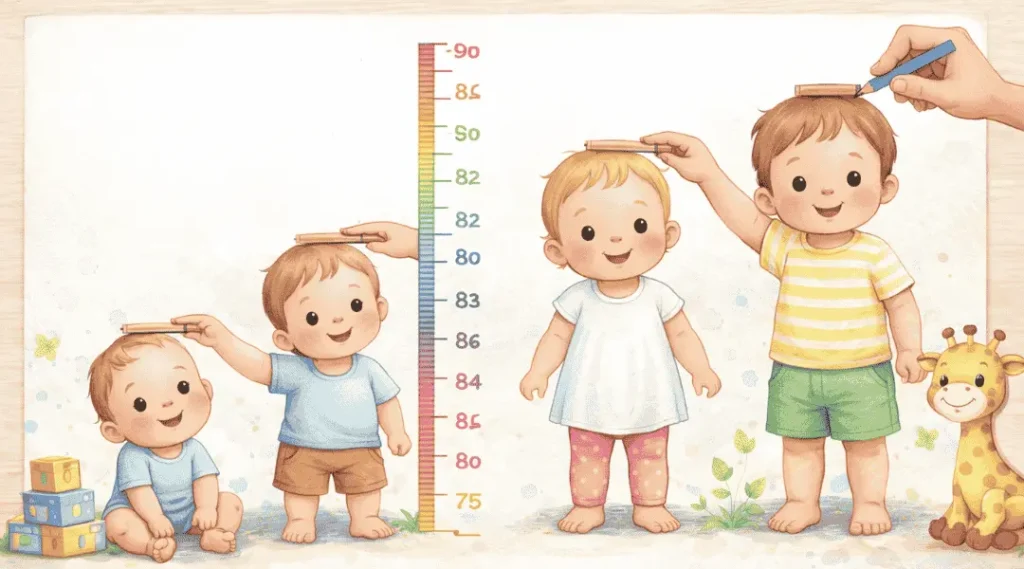
Monitor Development and Progress
A Baby size comparison chart allows parents to monitor development relative to standard growth curves. By charting height, weight, and head circumference, you can compare your baby’s growth to typical benchmarks and detect if any measurements fall outside the expected range.
This type of chart is especially reassuring for parents concerned about developmental milestones. Sudden changes in growth can prompt early discussions with healthcare providers, while steady growth gives confidence that your baby is thriving. Tracking multiple parameters together ensures a comprehensive view of your child’s overall development.
The chart also allows you to compare multiple measurements over time. For example, a sudden weight change relative to height might suggest the need for additional evaluation, while consistent growth confirms that your baby is thriving. Monitoring development in this structured manner helps create a proactive approach to child health rather than reacting only during medical checkups.
Celebrate Milestones with Your Baby
Using a baby size comparison chart is not only about tracking numbers but also about celebrating achievements. Every measurement recorded represents a step in your baby’s growth journey. From their first few centimeters at birth to their size at each monthly checkup, this chart allows you to visually witness milestones.
Parents can use this chart to mark special moments and celebrate small successes, like gaining a healthy amount of weight or reaching a new height. Seeing progress visually can be joyful and encouraging, creating lasting memories and a sense of connection between parent and child.
Use Creative Comparison Items
A Baby size comparison chart can be made fun and interactive by comparing your baby’s measurements to familiar items. For example, you might compare their length to fruits, vegetables, or everyday objects. These comparisons provide a tangible understanding of growth, making it easier for siblings or family members to visualize the child’s progress.
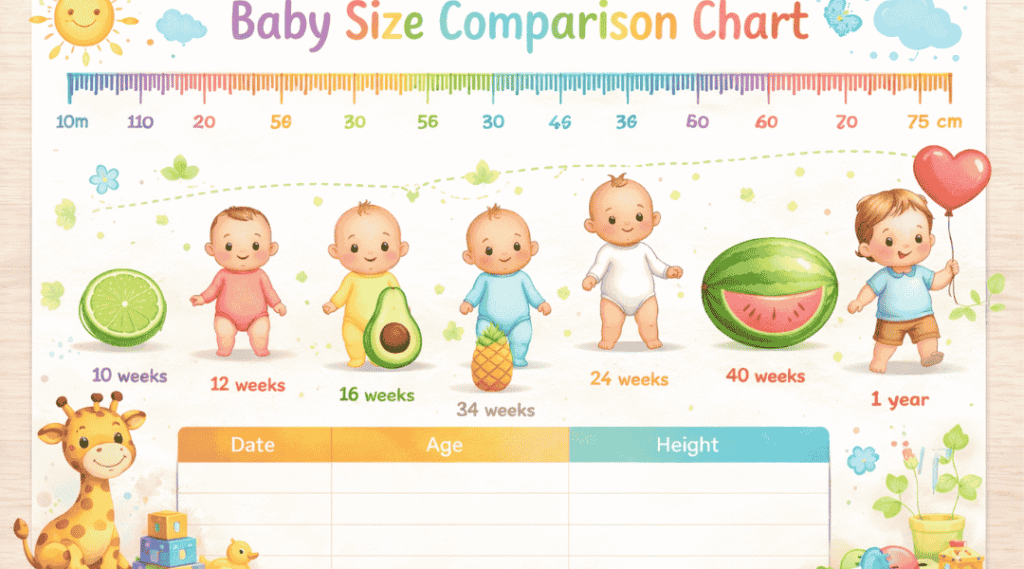
Additionally, multiple measurements can be tracked simultaneously. Charting height, weight, and head circumference together allows for a complete overview of development over time. A Baby size comparison chart thus becomes an engaging, informative, and visually appealing tool for parents.
Tips for Using Your Baby Size Comparison Chart Effectively
- Be consistent with measurements. Always use the same units (inches, centimeters, pounds, kilograms) to maintain accuracy.
- Update regularly. Record growth each month or during pediatric visits to maintain an accurate timeline.
- Combine visual and numerical data. Use colors or markers to highlight trends and patterns.
- Track multiple parameters. Include height, weight, and head circumference for a comprehensive view.
- Share and preserve. Keep the chart as a keepsake or share updates with family members.
Why Growth Tracking Matters
A Baby size comparison chart is crucial for ensuring your baby’s healthy development. Tracking growth allows parents to identify trends early, detect potential concerns, and take proactive steps if needed. It also empowers parents to celebrate progress and milestones, creating a structured and joyful approach to parenting.
Unlike sporadic measurements, a consistent chart provides valuable insight over time. It helps parents and caregivers make informed decisions and ensures that a baby’s growth aligns with typical developmental patterns.
Final Thoughts
A Baby size comparison chart is more than just a tool. It combines organization, insight, and memory-keeping, allowing parents to monitor growth, celebrate milestones, and understand developmental progress in a clear, visual way. By regularly updating height, weight, and head circumference, parents gain reassurance and confidence in their baby’s development.
Whether you are a new parent or an experienced caregiver, a Baby size comparison chart creates a structured and meaningful record of your child’s early years, capturing both milestones and memories for years to come.

FAQs – About Baby Size Comparison Charts
What is a Baby size comparison chart? A Baby size comparison chart is a tool that helps parents track their baby’s growth, including height, weight, and head circumference, in an organized and visual way.
Why should I use a Baby size comparison chart? Using a Baby size comparison chart allows parents to monitor development, spot trends over time, and ensure their baby is growing healthily. It also makes it easy to celebrate milestones as they occur.
How often should I update the chart? It is best to update your Baby size comparison chart monthly or whenever your baby has a checkup. Regular updates provide an accurate view of growth trends.
Can I compare my baby’s growth to objects? Yes, a Baby size comparison chart can include creative comparisons to fruits, vegetables, or everyday items to make growth progress more tangible and fun.
What measurements should I track? The main measurements to track in a Baby size comparison chart are height, weight, and head circumference. Including multiple parameters gives a complete picture of development.
Can I use the chart for multiple children? While it’s designed for individual tracking, you can create separate Baby size comparison charts for each child to compare growth patterns within the family.
How does this chart help with pediatric visits? A Baby size comparison chart provides a clear record of your child’s growth over time, which can be useful to share with your pediatrician and ensure your baby is meeting developmental milestones.