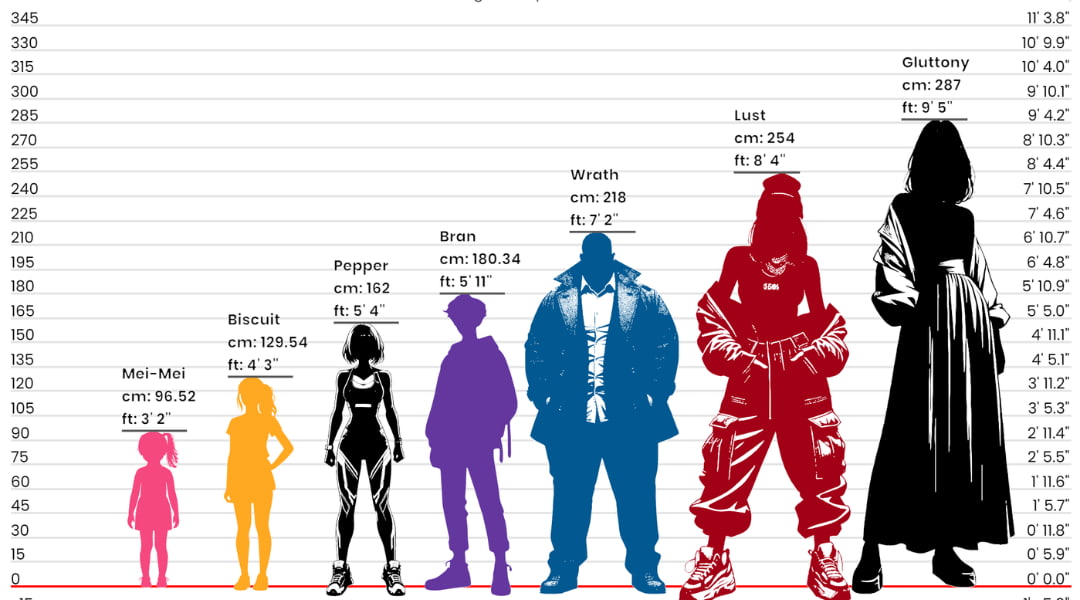
Human height limits have long fascinated scientists, historians, and everyday people alike. From ancient myths about giants to modern curiosity about record-breaking individuals, the question of how tall a human can grow continues to spark interest. As living conditions, nutrition, and healthcare have improved across the world, average human height has increased in many regions. This progress leads to an important and natural question: Is there a maximum height the human body can realistically reach?
In this article, we explore how height is determined, what biology allows, why extreme height comes with challenges, and whether future generations could push beyond current boundaries.
How Human Height Is Determined
Height is shaped by a combination of genetics and environment. Genetics provides the blueprint, setting a potential range for how tall a person can grow. Each individual inherits height-related traits from both parents, but this does not guarantee an exact outcome.
Environmental factors play a crucial role in determining where within that genetic range a person ends up. Proper nutrition, quality sleep, physical activity, and access to healthcare during childhood and adolescence all influence growth. When these conditions are optimal, people are more likely to reach their full genetic potential.
However, even under ideal circumstances, growth follows biological rules that cannot be exceeded indefinitely.
The Role of Growth Plates in Height
One of the most important biological factors related to height is the growth plates, also known as epiphyseal plates. These are areas of cartilage located at the ends of long bones such as the legs and arms. During childhood and teenage years, growth plates allow bones to lengthen.
As the body matures, hormones gradually cause these plates to harden and close. Once this happens, bones can no longer grow longer. For most people, growth plates close in the late teenage years or early twenties. After that point, natural height increase stops permanently.
This process alone places clear biological boundaries on how tall a person can become.
Historical Changes in Average Height
Looking at history helps explain why height trends change over time. In many countries, average height increased significantly over the last 150 years. Improvements in nutrition, reduced childhood disease, better sanitation, and modern medicine all contributed to healthier growth.
However, in many developed nations, this increase has slowed or stabilized. This suggests that populations may already be close to their genetic height potential. When basic needs are met and health conditions are optimal, height gains naturally level off.
This pattern supports the idea that human height does not increase endlessly, even with technological progress.
The Tallest Humans Ever Recorded
Some of the tallest individuals in history reached extraordinary heights, often well beyond what is typical. In most of these cases, extreme height resulted from medical conditions such as gigantism, caused by excessive growth hormone production during childhood.
While these individuals demonstrate that the human body can grow extremely tall under unusual conditions, they also reveal the serious consequences of excessive growth. Many experienced joint pain, heart strain, reduced mobility, and shorter life expectancy.
These cases are important because they show that extreme height is not a healthy or sustainable outcome for the human body.

Physical Constraints of Extreme Height
As height increases, the body faces growing physical challenges. Bones must support more weight, muscles must produce greater force, and joints experience increased stress. The spine, hips, knees, and ankles are especially vulnerable.
The heart also plays a major role. In taller bodies, the heart must work harder to pump blood over longer distances. This increased demand can strain the cardiovascular system over time.
Gravity further amplifies these challenges. Taller bodies experience greater mechanical pressure, making balance and mobility more difficult. These physical realities suggest that even if height could increase further, maintaining health at extreme levels would be difficult.
Human Height Limits and Biology
From a biological perspective, human height limits are shaped by the need for balance, efficiency, and survival. Evolution tends to favor traits that support long-term health and reproductive success rather than extreme physical characteristics.
While being taller can offer some advantages, such as reach or visibility, extreme height does not consistently improve survival. In fact, average-sized bodies often require fewer resources, place less strain on vital organs, and allow for greater agility.
This evolutionary balance helps explain why human height has remained within a relatively stable range across cultures and time periods.
Can Future Humans Grow Taller?
Advances in healthcare and nutrition may still lead to small increases in average height in certain regions, especially where living conditions are improving. However, most scientists believe that dramatic increases are unlikely.
Genetic modification is sometimes discussed as a future possibility. While gene-editing technologies are advancing, height is influenced by hundreds of genes working together. Changing such a complex trait safely and predictably remains extremely difficult.
Even if it were possible, ethical and health concerns would likely limit attempts to significantly alter natural growth patterns. Research on human growth patterns shows that genetics plays a major role in determining height.

Is There a Theoretical Maximum Height?
Scientists have attempted to estimate a theoretical upper limit for human height using biology and physics. While there is no single agreed-upon number, many experts suggest that heights beyond 8 to 9 feet would be extremely hard to sustain without severe health problems.
This does not mean that no individual could ever reach such heights, but rather that functioning normally at that size would be challenging. Skeletal stress, circulation demands, and energy requirements all increase with height.
These factors point to a practical upper boundary rather than an absolute mathematical limit.
Psychological and Social Perspectives
Height is not just a biological trait; it also has social meaning. Many cultures associate height with confidence, leadership, or attractiveness. This can lead to unrealistic expectations and pressure, especially among young people.
Understanding human height limits can help shift focus away from unattainable ideals. Accepting natural variation encourages a healthier self-image and reduces unnecessary comparison.
Confidence, skills, and personal growth matter far more than physical measurements.
Frequently Asked Questions
What are human height limits? Human height limits refer to the biological and physical boundaries that restrict how tall a healthy human body can grow under natural conditions.
Is there a maximum height for humans? There is no exact number, but extreme heights beyond 8 to 9 feet are generally associated with serious health challenges.
Why can’t humans grow taller forever? Growth stops when growth plates close, and physical factors such as bone strength, joint stress, and heart function limit further height increases.
Can nutrition still affect height today? Nutrition strongly affects height during childhood and adolescence, but cannot increase height once growth plates have closed.
Will future generations break current height records? Small increases may occur in some regions, but major changes are unlikely due to genetic and biological constraints.
Final Thoughts
The question of whether there is a maximum height for humans does not have a simple answer, but evidence strongly suggests that clear boundaries exist. Genetics sets the potential, environment influences the outcome, and biology enforces limits that cannot be ignored.
Human height limits are shaped by the need for structural stability, efficient movement, and long-term health. While extreme height is possible in rare cases, it often comes with serious challenges. For most people, height falls within a range that supports balance and well-being.
Rather than focusing on pushing physical boundaries, understanding and accepting natural variation allows individuals and societies to prioritize health, confidence, and quality of life. In that balance lies the true strength of the human body.