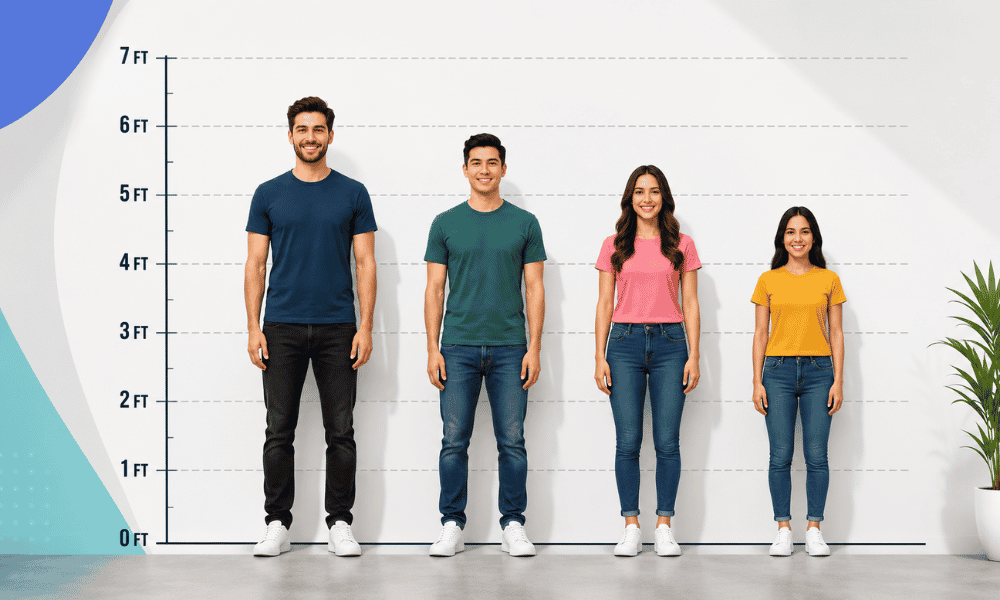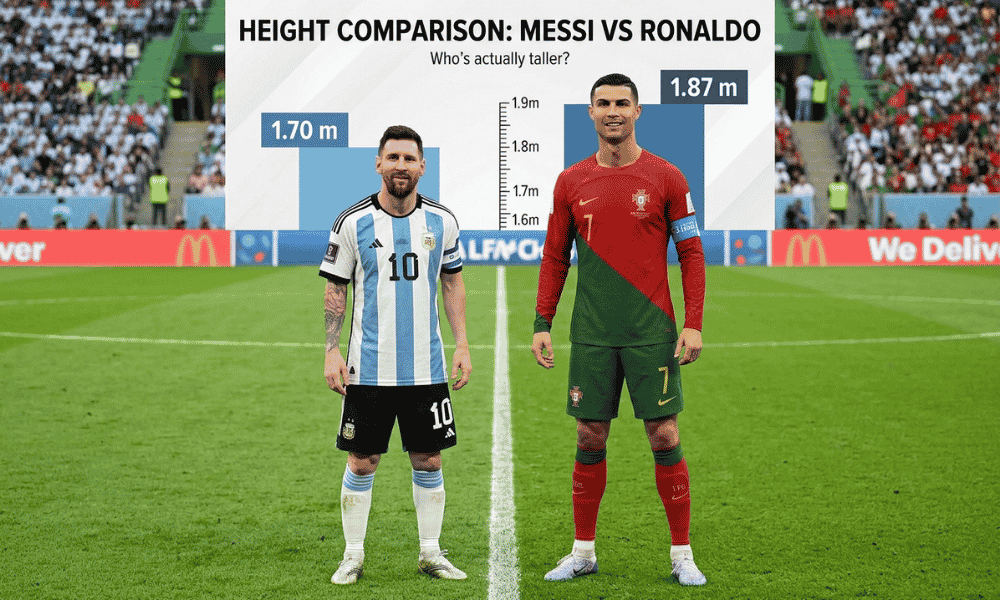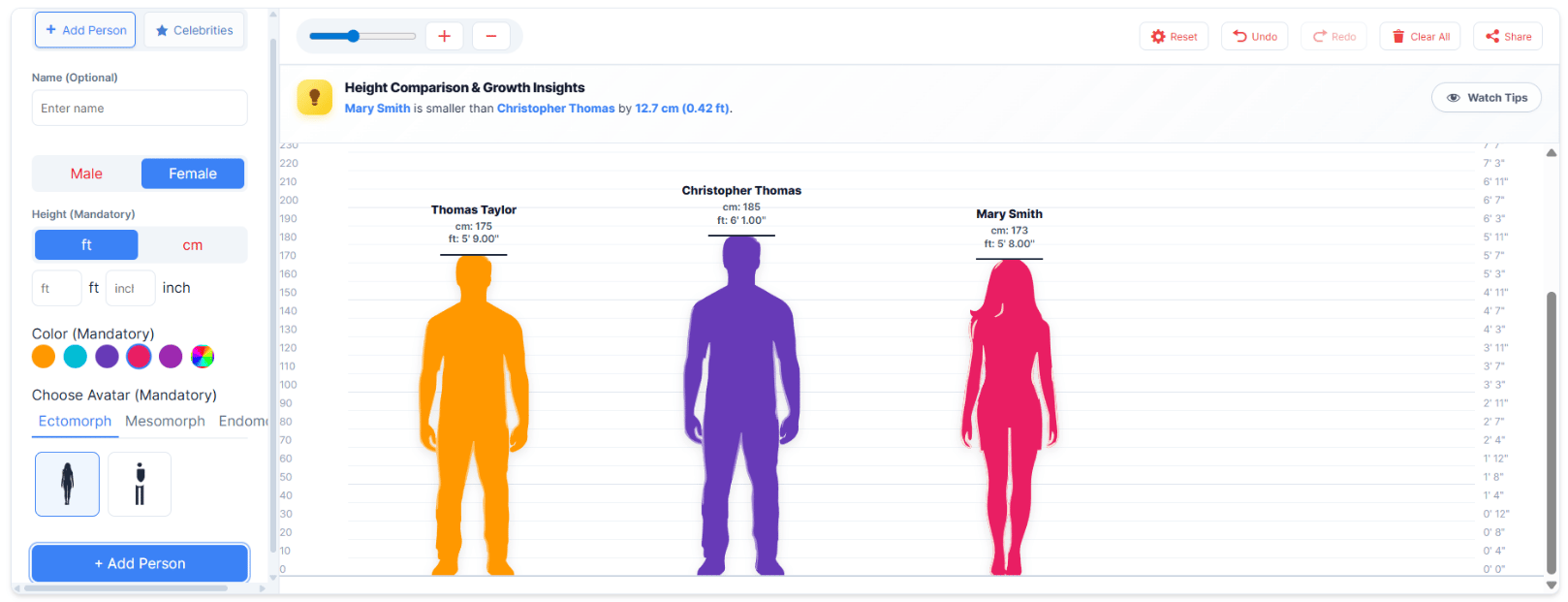
People often underestimate or overestimate height differences until they see them visually. Numbers like 170 cm, 180 cm, or 190 cm don’t always create a clear mental picture, especially when comparing multiple individuals. This is where digital tools become useful, especially an accurate height comparison tool that translates measurements into realistic visual representations.
Instead of guessing or imagining, users can directly see how different heights look side by side. This makes it easier to understand proportions in real-world contexts such as social interaction, sports, media perception, and even simple curiosity.
Why accuracy matters in height comparison
Not all height comparison methods are reliable. A basic illustration or rough estimation often fails to reflect true proportions. An accurate height comparison tool solves this problem by using standardized scaling systems based on real measurement units, such as centimeters or feet.
Accuracy is important because even small errors can distort perception. A difference of 5 cm may seem minor on paper, but visually it can appear more noticeable depending on posture or scaling. A properly designed system ensures that every figure is proportionally correct, allowing users to trust what they see.
This is especially useful when comparing multiple individuals, where consistency becomes even more important.
How realistic simulators improve understanding
A realistic height comparison simulator goes beyond basic charts or static images. It uses proportional figures or avatars that mimic human posture and alignment, making the comparison feel closer to real life.
Instead of simply placing two numbers side by side, the simulator adjusts the scale so that the difference is visually obvious yet natural. This helps users understand how height differences appear in everyday situations, such as standing in a group or taking photos.
By turning abstract numbers into a visual form, a realistic height comparison simulator reduces confusion and improves perception accuracy.
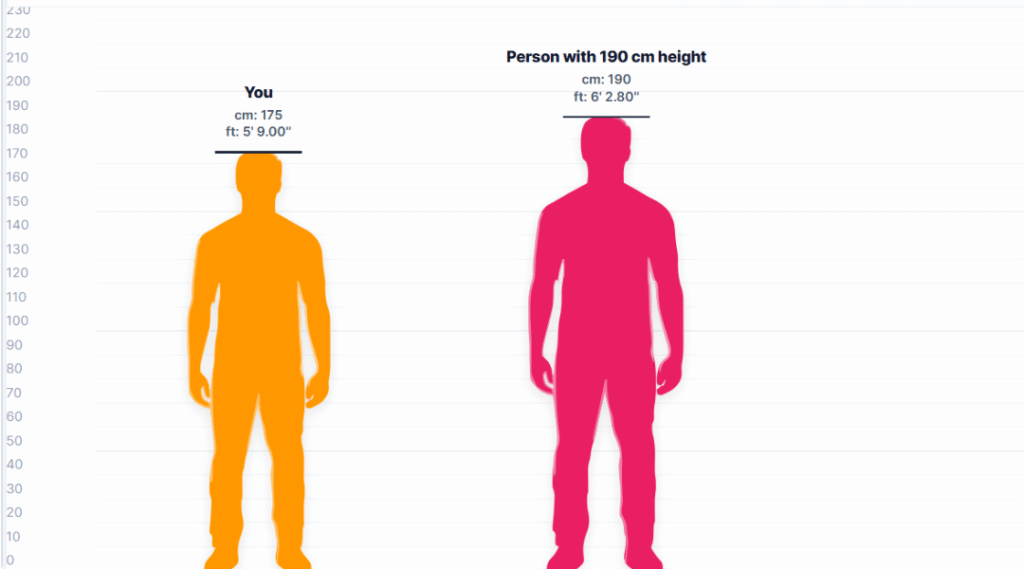
Comparing yourself with taller individuals like 190 cm
One of the most common uses of these tools is to compare height with 190 cm person scenarios. Since 190 cm is considered quite tall in many regions, it serves as a strong reference point for understanding height gaps.
When someone inputs their own height next to 190 cm, the visual difference becomes instantly clear. For example, a person who is 165 cm can immediately see how significant the gap is compared to someone who is 190 cm, while someone who is 180 cm can see a much smaller difference.
This kind of comparison is especially helpful for understanding how height differences appear in real-world interactions, such as group photos, sports lineups, or public appearances.
The role of online comparison pages
Modern users prefer quick access without installation or complex setup. A height comparison page online tool provides exactly that, an accessible web-based interface where users can instantly input heights and get results.
These pages are usually simple in design but powerful in function. They allow users to enter multiple values, switch between units, and instantly visualize differences. Some even include preset references, such as celebrities or standard height benchmarks.
The convenience of an online height comparison tool makes it popular among students, content creators, and general users who want quick visual answers without technical steps.
Why visual comparison feels more natural than numbers
Human brains process visuals faster than raw data. Seeing two figures next to each other creates instant understanding, while numbers require mental calculation.
This is why an accurate height comparison tool is far more effective than simply reading height values. It transforms abstract information into something intuitive.
When users interact with a realistic height comparison simulator, they are not just reading differences; they are seeing them in proportion, which leads to better understanding and retention.
Everyday use cases of height comparison tools
These tools are not limited to curiosity alone. Many people use them in practical and creative ways.
Some users explore how they look next to athletes or public figures to understand physical presence. Others use it for character design in digital art, gaming avatars, or storytelling projects where proportion accuracy matters.
An online height comparison tool is also useful in educational settings where students learn about measurement systems, scaling, and human anatomy through visual examples.
Even in casual conversations, people often use these tools to settle debates about height differences in a fun, non-technical way.
Common misconceptions about height differences
Without visual context, people often misjudge height gaps. A difference of 10 cm may seem huge when written, but in reality, it may not look dramatic unless placed side by side.
An accurate height comparison tool helps correct these misconceptions by showing real proportional differences. It reveals that many perceived “large gaps” are actually moderate in visual terms.
Similarly, when users compare height with 190 cm person, they often realize that posture and footwear can also influence perception in real-life settings.
How simulators create realistic scaling
A realistic height comparison simulator works by converting height values into proportional digital units. These units are then used to generate figures or avatars that align on a common baseline, usually the ground level.
This ensures that differences are shown vertically in a consistent and realistic manner. Some advanced systems even adjust body proportions slightly to better mimic human structure, making comparisons feel natural rather than abstract.
The goal is not just accuracy in numbers but realism in visual interpretation.
Why online tools are becoming more popular
Digital convenience has made tools like online height comparison pages widely used. Users prefer instant access without downloads or complicated interfaces.
Another reason for popularity is shareability. People often share comparison results with friends or on social media, especially when they discover interesting differences.
The ability to instantly compare height with 190 cm person or any other reference point makes these tools engaging and interactive rather than static.

Psychological effect of height visualization
Seeing real comparisons can change how people perceive themselves. An accurate height comparison tool often provides reassurance or clarity by showing that height differences are usually smaller than expected in real life.
A realistic height comparison simulator also reduces exaggeration in perception, especially when users compare themselves to celebrities or tall individuals.
This visual clarity helps users develop a more balanced understanding of physical differences without overthinking or misjudging them.
The value of simplicity in height comparison tools
Despite their usefulness, the best tools remain simple. A height comparison page online tool does not require complex inputs, just height values and optional references.
Simplicity ensures that users can focus on understanding results rather than navigating complicated interfaces. The faster the output, the more useful the experience becomes.
This simplicity, combined with accuracy, is what makes modern height comparison systems effective and widely adopted.
Final thoughts
Height is often misunderstood when viewed only through numbers. An accurate height comparison tool helps bridge the gap between data and perception by turning measurements into a clear visual understanding.
With a realistic height comparison simulator, users can see how different heights actually look in real life rather than guessing. Whether you want to compare height with 190 cm person or explore general differences, these tools provide instant clarity.
An online height comparison tool brings all of this together in a simple, accessible format, making height visualization fast, accurate, and easy for everyone.